ODP BNI: Officer Development Program
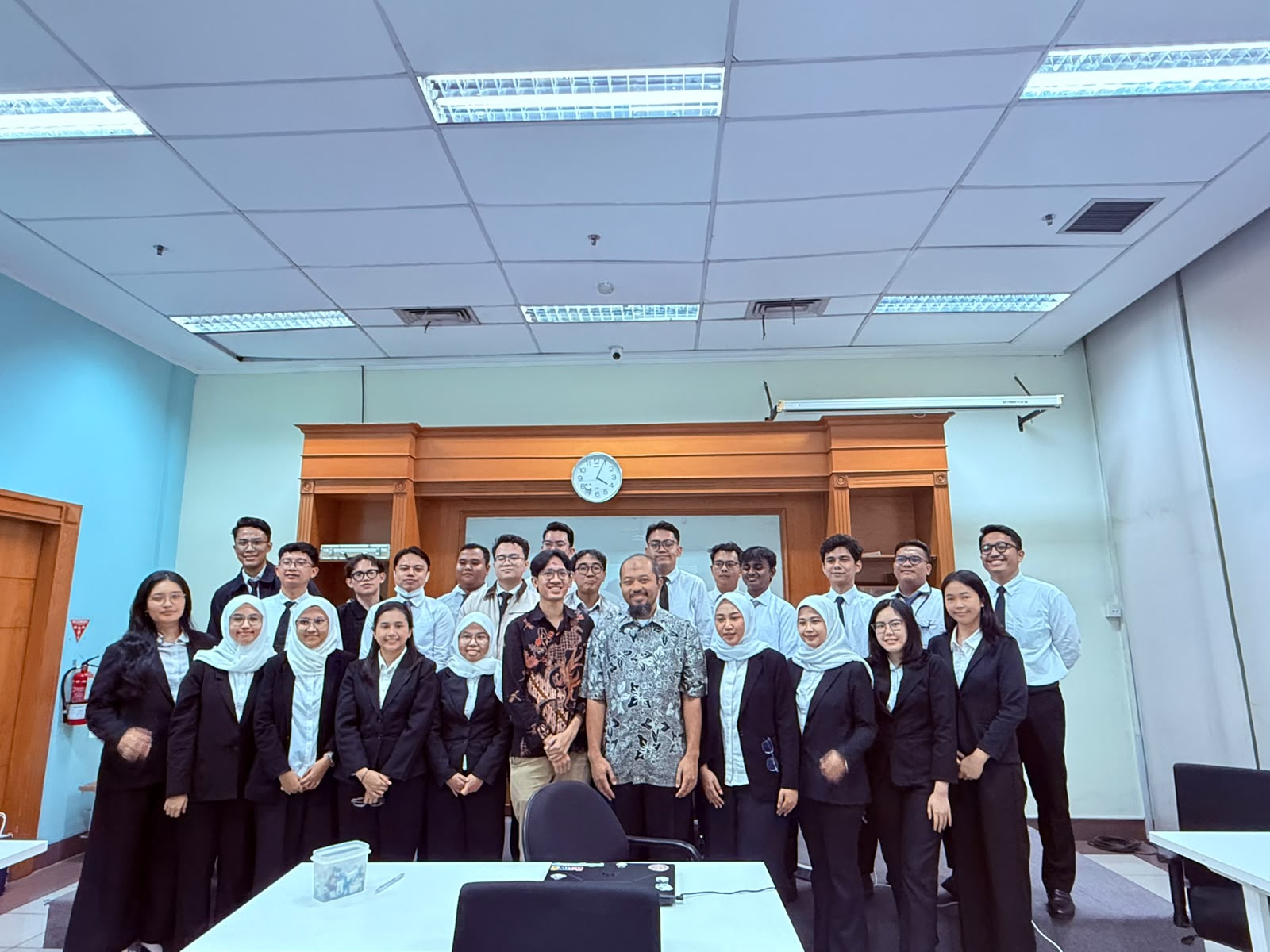
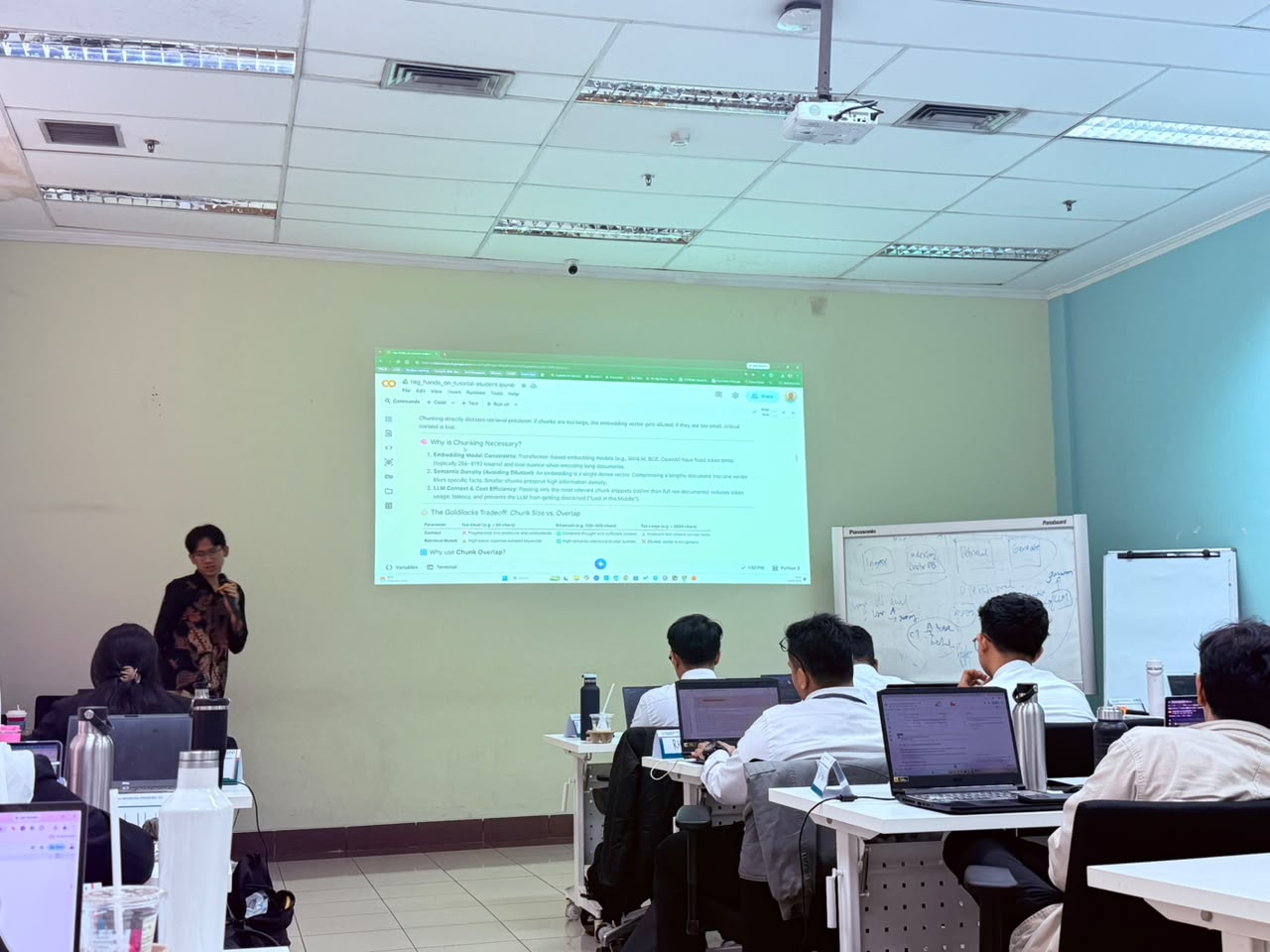
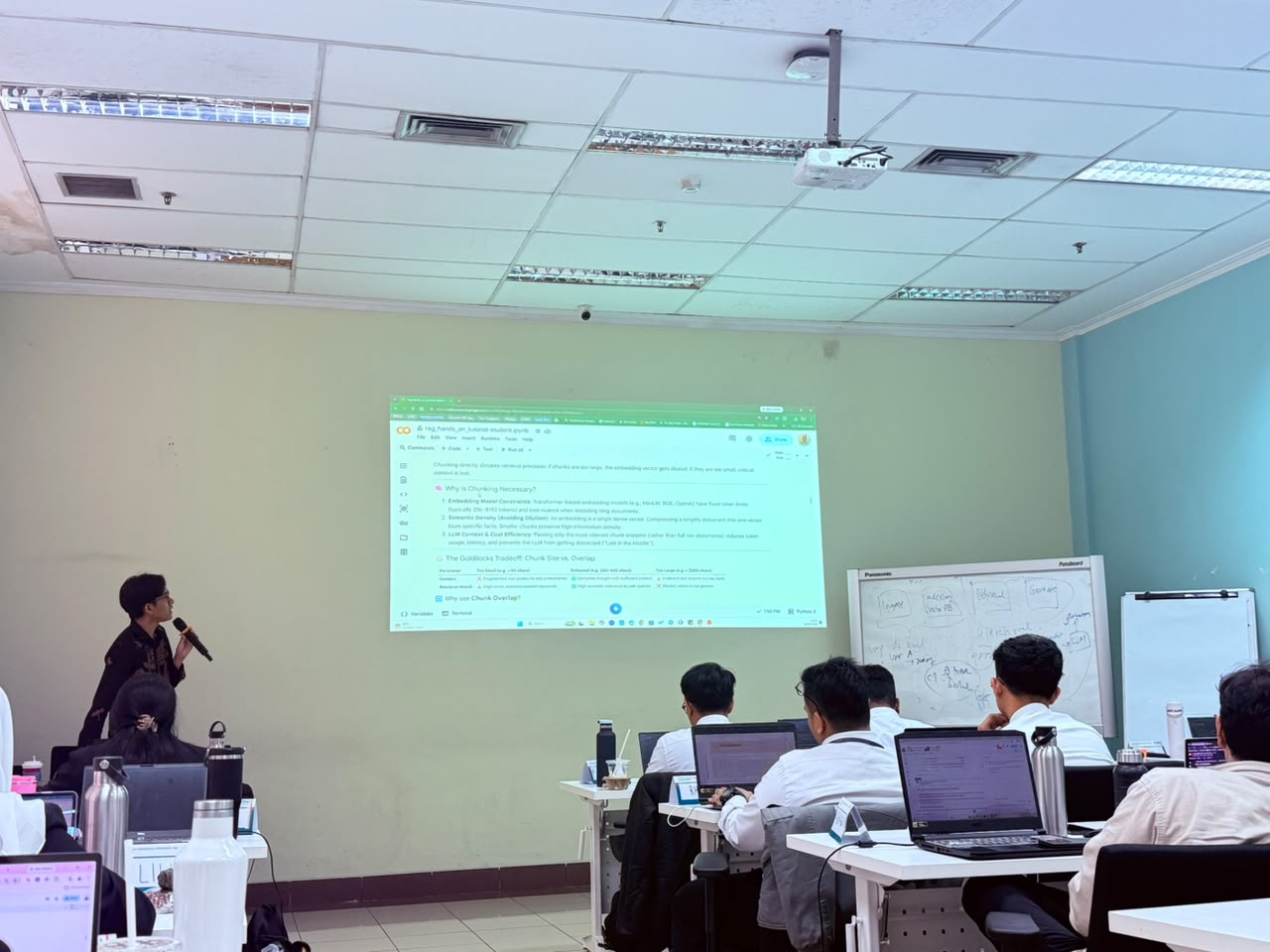
BNI’s Officer Development Program (ODP) runs new officers through a 30-working-day Data Analytics, AI & Big Data bootcamp before they hit the floor, organised by Pusilkom UI on BNI’s behalf. I was brought in for Day 22, which Pusilkom had scoped as the RAG day: a 6-hour block for a ~30-person cohort, most of whom had spent the previous three weeks on statistics, SQL and classical ML, not language models.
Why RAG, and why this cohort
Officer trainees at a bank are exactly the audience RAG is built for: people who will eventually need an internal assistant to answer questions grounded in policy documents, product terms and compliance rules, where a hallucinated answer is a real liability, not a curiosity. So instead of treating RAG as a NLP-research topic, I framed the whole session around one question a bank actually has to answer: how do you stop the model from confidently making things up about a product it was never told about?
How the day was structured
Six hours is enough time to go past the “chatbot with a vector database” mental model that most naive-RAG tutorials leave people with, so I split the session roughly into:
- Naive RAG, and where it quietly breaks. Chunking a document store, embedding it, and doing top-k similarity search is enough to build a demo, but the trainees walked through concrete failure cases first: queries that need information split across chunks, near-duplicate chunks that crowd out the right one, and questions the retriever answers confidently even when nothing relevant was actually indexed.
- Hybrid search. Combining dense embedding similarity with sparse lexical retrieval (BM25-style) so exact terms (account types, product codes, regulation numbers) aren’t lost to semantic drift, which matters a lot more in banking documents than in general-purpose Q&A.
- Reranking. Treating retrieval as a two-stage problem: a cheap, high-recall first pass, then a more expensive cross-encoder reranker over the candidate set before anything reaches the generation step.
- RAG-triad evaluation. Rather than eyeballing outputs, evaluating each of the three legs that can independently fail: is the retrieved context relevant to the query, is the answer grounded in that context, and is the answer actually relevant to what was asked, so the cohort had a vocabulary for diagnosing why a RAG pipeline gave a bad answer, not just that it did.
What stuck
The most useful moment of the day, from a trainer’s perspective, wasn’t a slide; it was watching trainees try to break a retrieval pipeline live with adversarial queries once they understood the failure modes, instead of trusting whatever the demo returned. That’s the actual goal of a session like this: not memorising a RAG diagram, but building the instinct to ask “what would make this pipeline lie to me?” before you ship it into a workflow where officers are making real decisions from its answers.